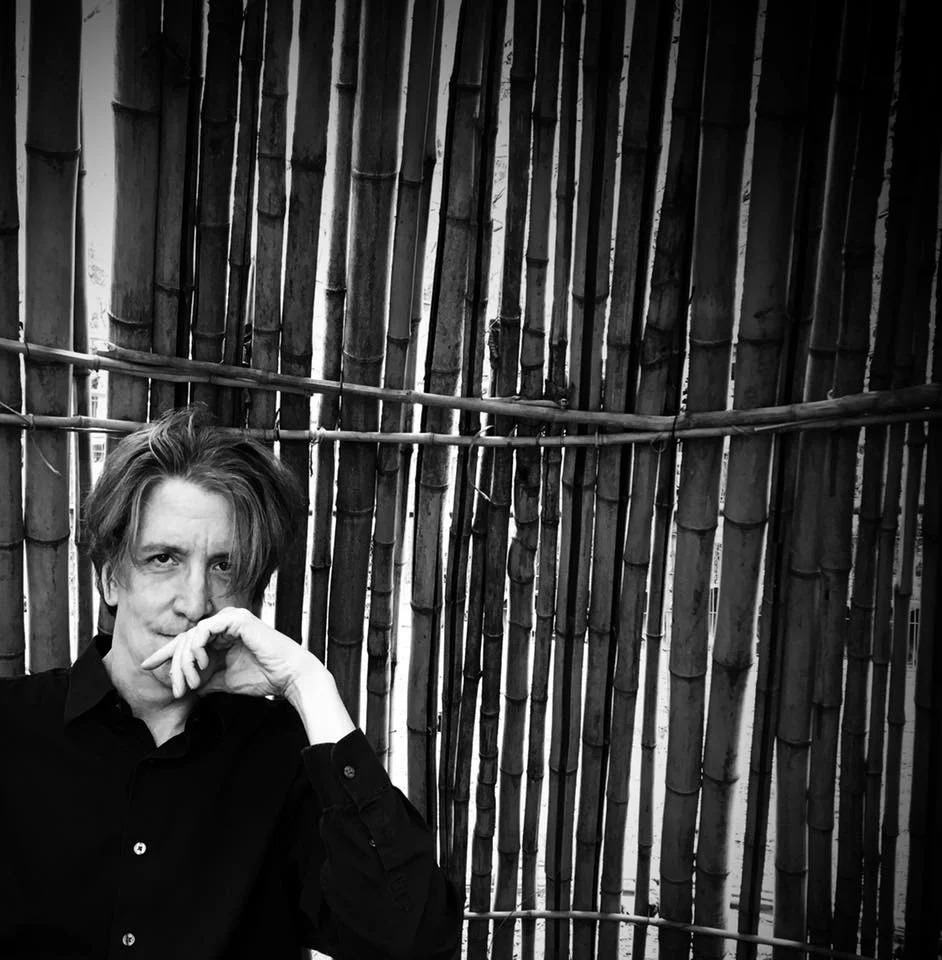
About Jeff Hunt:
Jeff Hunt is an American producer, curator, and designer. He is the founder of Table of the Elements, an independent publishing platform established in 1993 that focuses on experimental, minimalist, and avant-garde sound, text, and film. Through TotE and its related imprints, Hunt has managed releases by artists including Tony Conrad, Rhys Chatham, John Fahey, John Cale, Pauline Oliveros, Mike Kelley, Captain Beefheart, La Monte Young, Laurie Spielgel, Christian Marclay, Éliane Radigue, Gastr del Sol, Jim O’Rourke, Faust, Fennesz, Keiji Haino, and Robert Longo, as well as projects featuring members of Sonic Youth, Swans, the Velvet Underground, and The Cure.
Hunt worked closely with Tony Conrad for decades, producing archival and contemporary projects related to Conrad’s film, sound, and intermedia work. Associated artists have appeared in programs at institutions such as Tate Modern, the Whitney Museum of American Art, Lincoln Center, and Pace Gallery, in contexts that helped to reframe late-20th-century minimalism and experimental music. Coverage of Hunt and Table of the Elements has appeared in publications including Artforum, The New Yorker, The New York Times, The Guardian, Frieze, and the Atlanta Journal-Constitution.
In 2003, Table of the Elements released the first complete edition of Laurie Spiegel’s Harmonices Mundi. An excerpt of the piece had been chosen decades earlier by Carl Sagan for the Voyager Golden Record.
Hunt also produces What the Pictures Sound Like, an audiovisual project built around the photographic archive of Art Kane, the American photojournalist known for Harlem 1958 (A Great Day In Harlem). The project integrates live experimental music by Reeves Gabrels and Kane’s son Jonathan with projections of Kane’s portraits of cultural figures such as Aretha Franklin, The Rolling Stones, The Doors, Janis Joplin, Louis Armstrong, and Bob Dylan.
Hunt is collaborating with neuroscientist and composer Dave Soldier (David Sulzer) on a forthcoming book about Johannes Kepler, serving as its editor and publisher. The work grows out of Soldier’s research into the interplay of music, mathematics, and perception.
He also makes several appearances in Tyler Hubby’s award-winning documentary feature, Tony Conrad: Completely In the Present.
“[John] Cale left the Dream Syndicate for the Velvet Underground; Conrad found a community in avant-garde film. But after Reed fired Cale from the VU and he was at loose ends, he and Conrad revived their string-drone collaborations. Some of these works can be found on the box set John Cale: New York in the 1960s, released in 2000 on Jeff Hunt’s Table of the Elements label. Hunt, who played a big part in Conrad’s return to music in the early 1990s, is one of the film’s most articulate expert witnesses to Conrad’s artistic achievements. … In 2000, Table of the Elements finally released digital remasters of three early-’60s Dream Syndicate recordings, which Hunt says appeared mysteriously in the mail one day, as well as the boxed set Tony Conrad: Early Minimalism, which includes one work that is actually “early,” Conrad’s divine Four Violins (1964), as well as other disks by Conrad, MacLise, and Jack Smith.”
Amy Taubin, Artforum
About Table of the Elements:
“Time, time, time. Life should be abundant enough for each person to feel what it is to have the greatest pleasure in wasting time. For my own part, I know that now, when music playback systems can put out hours and hours of sound at one flick of the button, it’s nothing unusual to think about playing a set for an hour. There was a time, though, when it really meant something to like playing your 78 RPM records on the 16 RPM setting — so they would run a half hour, and sound so… so… so… slow.”
— Tony Conrad, Early Minimalism Vol. 1, 1996
TABLE OF THE ELEMENTS is a curatorial network and interdisciplinary platform, live-event presenter, and fine-arts publisher of print, audio, and film, lauded by Pitchfork Media as “a national treasure.” Since its origin as a record label in 1993, TotE has been dedicated to preserving, promoting, and promulgating works by international creators of radical innovation. The organizations’s 170-plus releases — along with influential intermedia festivals — comprise a vital contemporary chronicle, a survey of meaningful eruptions across a broad horizon of sound, word, and vision. Each unique project demonstrates how a publishing concern might romp wild, unbridled from the carousel of convention.
• • • • •
"The supremacy of Table of the Elements as an unwavering outpost of ultra-experimental strains can be attributed to its concomitant adherence to valiance. Most of the Table of the Elements catalog has no broad commercial appeal, and many of its projects are risky ventures, even with respect to the experimental marketplace. Yet, this philosophy of risk works because everybody associated with the label feels like they're doing important work releasing important records, and they're willing to go for broke to make it happen.”
—Grayson Haver Currin, Pitchfork
“The hallmarks of this New Archivism are beautiful and innovative packaging, elaborate and idiosyncratic liner notes, rare and obscure recordings ... Working with graphic designers such as the Grammy-winning Susan Archie, Jeff Hunt produced a collection that combines varied textures, lavish finishes, and period details with art from the era of the original source recordings. Their treatment of Robert Longo’s late 1970s photographs for Rhys Chatham’s releases could, for instance, measure up to what’s on view at most contemporary art centers. In addition to its archival endeavor, TotE also releases the new work of its avant-garde heroes and their devotees. TotE’s active support of the work of sonic pioneers ensures that theirs are living traditions — not ossified museum objects.”
—Thomas Peake, Art Papers
About Tony Conrad: Completely in the Present
A Film by Tyler Hubby:
"Hubby's film captures Conrad in all his facets ... broadly as a man determined to make 'abstract art funny, happy, energetic, joyful.' Conrad lived long enough to see his early recordings, barely or never released, get the reissue and the attention they deserve. ... [Completely In the Present] is a sharp, sweet, eloquent documentary about the merriest, most artistically expansive minimalist on record. His work and his life asserted the importance of listening for the sounds nobody else has heard."
—Chicago Tribune
“Joyous, exhilarating, and transformative, Tyler Hubby’s documentary is essential viewing for anyone involved in the history of music and visual art.”
—Artforum
"Conrad was 100 percent badass. Without Tyler Hubby’s documentary and Table of the Elements ... one of the great stories of American music and art might have gone underappreciated.”
—Henry Rollins